Description
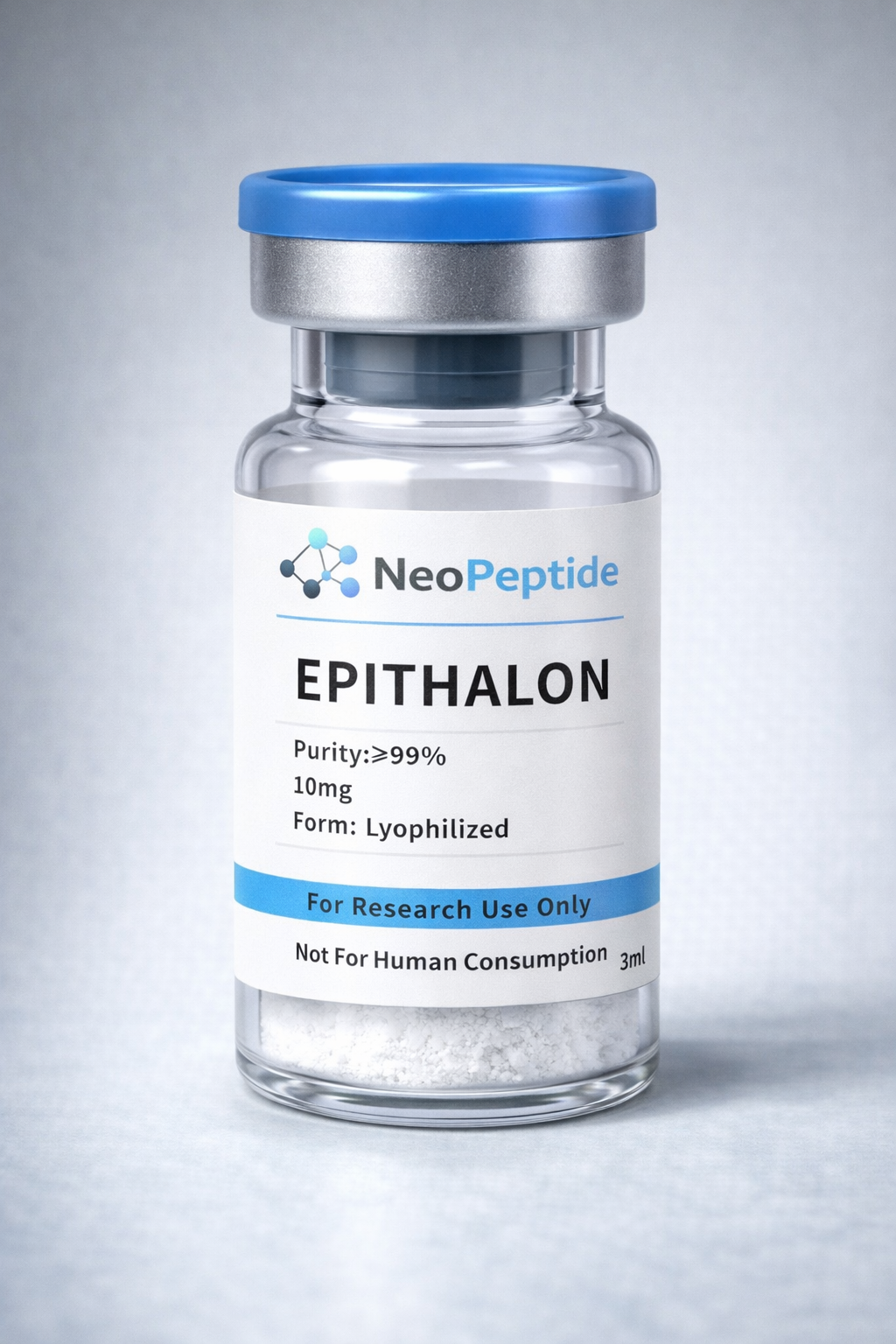
Epithalon Peptide
Research has suggested that Epithalon, (also known as AEDG peptide, tetrapeptide Epitalon, Epithalon, or Epithalone) may regulate the function of the brain, the pineal gland, and the eye retina. Studies in the peptide have spurred numerous research hypotheses, which include possible sleep regulation via pineal gland stimulation, releasing more melatonin. Studies also speculate that the peptide may stimulate the generation of telomerase, may exhibit strong antioxidant characteristics, and extend the retina’s workable integrity.
With recent technology and ongoing advances in the scientific field, methods have been developed to synthesize complex peptide preparations from the extracts of several different tissues. One such peptide in the tissues is ‘Epithalamin,’ naturally produced in the pineal gland. Epithalamin has been suggested to be functional in increasing melatonin production, improving the immunological and anti-carcinogenic functions in rats and mice, and restoring reproductive function in aged rodents. Utilizing the recent advancements in science, a peptide similar to Epithalamin was synthesized and titled ‘Epithalon.’ Epithalon is derived from a naturally occurring peptide belonging to both the pineal gland and eye retina.(1)
Overview
Epithalon is a synthetic tetrapeptide, also known as AEDG peptide, composed of amino acids Ala-Glu-Asp-Gly.(2) The peptide has been suggested to exhibit action similar to Epithalamin via various modes. Epithalamin is a related pineal peptide preparation containing Epithalon, that has been purported to potentially increase the average lifespan of various experimental models by 11–31% and may reduce mortality in murine models by a suggested 52%.(3) This potential mechanism and further studies are described below.
Chemical Makeup
Molecular Formula: C14H22N4O9
Molecular Weight: 390.34 g/mol
Other Known Titles: Epitalon, Epithalone